

Our Day Treatment provides full-time addiction treatment, with more attention and structure than traditional outpatient. This means you get to work with compassionate clinicians who create treatment plans based on your history and needs.
Each plan is made up of evidence-based therapies and healing, holistic modalities. Our goal is to ensure our clients can learn to integrate into the recovery community with:
We know that every client will have different needs, and that’s why we aim to customize our treatment plans. These day programs typically last between 3 and 6 weeks, and we encourage clients to transition into the next level of care, our Partial Day Treatment, after that ends. However, there is no set timeline, and no one is forced to continue with multiple programs. We work with you during your time here to make sure you meet your short-term and long-term goals in a way that you are comfortable with.
So what does treatment look like?
Each person is different, as mentioned, and so is the structure of the care that is received. You might participate in solution-focused therapy alongside K9 therapy and art therapy, while another client might participate in cognitive behavioral therapy, psychoeducation, and nutrition for recovery.
Whatever the actual modalities, you can expect a highly structured form of treatment where each day is filled with engaging activities. Your morning might include:
In the afternoon, you might have:
All of our clients participate in a combination of individual and group therapy sessions. This fulfills many needs, starting with the personalized attention that you might require from an individual therapist to help you identify personal causes of addiction and personal triggers, and ending with peer support.
During both opportunities, you might:
Some programs also incorporate bi-weekly family support meetings, support group sessions like 12-step programs, and family therapy. Studies indicate that involving your family and building a network of support from things like 12-step programs can increase your chances of success and long-term sobriety.

If you or someone in your family is struggling with addiction, it’s important to truly understand how rehab can help.
One of the greatest indicators of a successful rehab program is reduced substance abuse.
This is only possible through programs that provide a structured environment where clients get support from licensed professionals and staff members, participate in individual and group therapy sessions, and participate in a comprehensive outpatient program that tackles more than just physical addiction, one that tackles the psychological causes of addiction.
By committing to a program, clients have the greatest chance of success in maintaining sobriety long after they leave our facility.
That’s not the only indicator, though. Improved mental health goes hand in hand with reduced substance abuse.
Our treatment center focuses on fostering personal growth and healing as an integral part of an outpatient treatment plan. This means personalized programs are cultivated for each client after individual assessments, time spent with psychologists, therapists, support staff, family, and peers.
These sessions provide an opportunity to better understand the connection between physical addiction and mental health, and how underlying mental health disorders or symptoms can contribute to the risk of addiction.
Each of the programs we offer helps our clients:
Issues in the past, traumatic experiences, even family dynamics, can contribute to substance abuse, which is why programs might include family therapy sessions so that progress can be maintained long after an outpatient program ends, and families can work together.
With East Coast Recovery, our compassionate team is here to help you find the right level of treatment, whether that is a full-day program or a partial-day program. When you first reach out, we will conduct an initial assessment to make sure that your program has the right types of therapies and holistic treatments for you.
Reach out today at (617) 390-8349 to get started.
At East Coast Recovery, we offer two main outpatient programs: our day program and partial day programs. We use evidence-based treatment for both, mixing evidence-based therapy with holistic programs to treat substance abuse and mental health disorders.
Our outpatient programs are best suited for people with mild to moderate addictions and/or mental health disorders. In order to successfully participate in outpatient programs like our day or partial day programs, you will need to have a stable living environment and a means to get yourself to and from our treatment center for sessions.
Our outpatient programs typically run 30-90 days, but when you meet with our admissions team, we can help determine what length is best for your situation. In many cases, people who want a longer treatment plan will transition from a day program to a partial day program, then continue with outpatient programs like support group meetings.
With East Coast Recovery, the number of hours per day is based on the type of program you choose. For example, our partial day program is 10-12 weekly hours, Monday through Friday, which equates to a few hours per day.
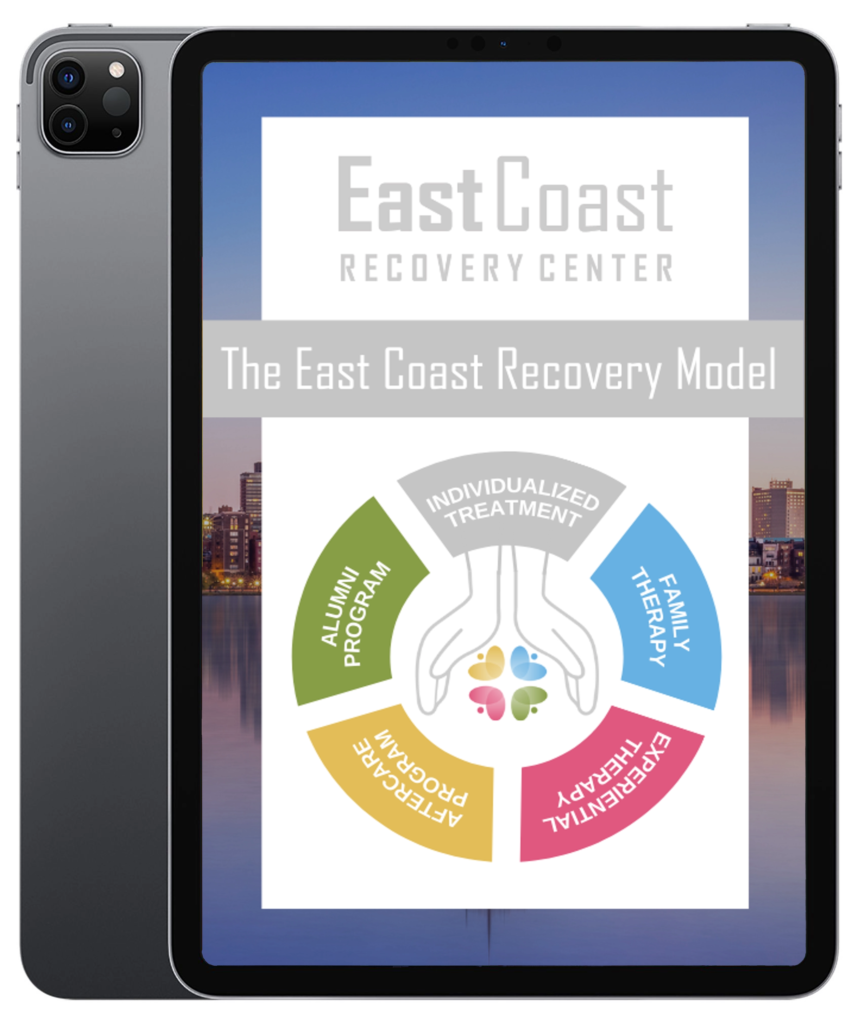
Download Our FREE East Coast Recovery Model eBook
FREE Insurance Verification









Helping Those Struggling With Addiction Achieve SUCCESS