Medical Reviewer: Megan Berube, LICSW, Clinical Director
Inhalant use disorder happens when people use household or workplace items like model glue, spray paint, or lighter fluid to get high. Sometimes called huffing, bagging, or even snorting, this can have serious health effects and requires professional treatment. Thousands of products can be abused like gasoline, nail polish remover, paint thinner, and anything else that can get people high.
At East Coast Recovery, we know that rewiring the brain from inhalant addiction takes time, and that is why we offer a robust outpatient program with multiple levels of care. Here, we welcome residents from all regions of Massachusetts, helping out-of-town clients coordinate with local sober living environments if a temporary local stay is needed during commuter treatment. Support doesn’t stop when your program ends. A robust alumni network, aftercare, and ongoing community services keep you connected to a sober peer group for life.

As an outpatient facility, we provide a range of care with flexible scheduling options. We also incorporate individualized therapies, meaning, our assessments for deciding which therapies are best for each client. At East Coast Recovery, our inhalant addiction treatment programs incorporate things like experiential therapy, family programs, group therapy, and aftercare support to ensure clients get the best possible chance at long-term recovery.
No two clients struggle alike, and therefore no two clients have the same program.
In many cases, MA clients turn to drugs or alcohol to cover up or self-medicate symptoms from something else. Many addictive traits are frequently intertwined with underlying mental health conditions too. Inhalant use often co-occurs with underlying mental health conditions like depression, anxiety, or PTSD. Professional care treats both the addiction and the mental health root cause simultaneously.
That is why our clinical team can treat co-occurring struggles like depression, anxiety, or trauma through our day or partial day programs.
One of the primary therapies we employ is cognitive behavioral therapy. This is one of the most successful treatments for addiction recovery and mental health disorders like depression or anxiety. With this, our therapists work individually with clients to identify deep behavioral triggers, impulsive thought loops, and self-destructive actions.
Cognitive behavioral therapy can teach you how to deal with stressful situations and resist the urge to use inhalants by swapping negative behaviors for positive ones. The goal is to better understand what these are and replace them with productive habits.
Since addiction disrupts the entire family dynamic, at East Coast Recovery we offer dedicated family counseling to resolve codependent behaviors and improve life at home. This is made even more efficacious by our outpatient program design, allowing clients to learn how to improve communication at home and practice it in real time in between sessions at our Cohasset facility.
At East Coast Recovery we provide full Day Treatment (PHP) and Partial Day Treatment (Partial Day Treatment Program) programs. This means clients receive extensive clinical immersion at a level of care best for them, with the opportunity to step down as they reach new goals. This also means, like the lessons learned in family therapy, that clients can immediately practice their newly developed coping strategies in real-world environments.
With these, clients participate in things like group therapy which allows a connection with others who understand the specific challenges of relapse and recovery, breaking the isolation that often triggers substance abuse.
Our goal is to utilize a lot of experiential activities and other forms of engagement that offer alternatives to inhalant use, building new skills, bolstering self-esteem, and offering social experience. This can include art therapy, play therapy, animal therapy, and outdoor therapy.
Finally, we aim to reduce the risk of relapse by not only teaching healthy coping skills but also building a network of sober, supportive members within your community. For this, our team helps you participate in 12-step programs and support groups, things that you can continue to utilize long after you leave our facility.
Inhalant use disorder can cause many symptoms, including irritability, confusion, paranoia, and depression. Sometimes, people who are struggling with pre-existing mental health disorders like depression may find that substance abuse, like inhalants, can exacerbate those symptoms.
For that reason, we provide dual diagnosis treatment for people who struggle with both mental health and substance abuse disorders.
We specialize in flexible outpatient programs, including our full-day and partial-day programs. Each of these can last anywhere between 30 and 90 days, depending on your needs, and they vary in terms of how frequently they meet.
If you are participating in a dual diagnosis program or you are struggling with addiction to inhalants and other substances that might necessitate medication-assisted treatment, both of those can be designated as a day or partial-day program.
During these programs, you’ll participate in a range of different therapies and holistic modalities to help you build healthy coping skills, manage stress more effectively, and foster a healthy support network for your continuing sobriety.
At East Coast Recovery, our inhalant addiction treatment programs incorporate things like experiential therapy, family programs, group therapy, and aftercare support to ensure clients get the best possible chance at long-term recovery.
At our facility, we utilize things like cognitive behavioral therapy and dialectical behavioral therapy. These are some of the most common forms of treatment for addiction. Cognitive behavioral therapy can teach you how to deal with stressful situations and resist the urge to use inhalants by swapping negative behaviors for positive ones.
We also utilize family therapy as a way to improve communication and relationships between your family members. This can teach family members about the risks of inhalant use and help them support you in your sobriety.
Our goal is to utilize a lot of experiential activities and other forms of engagement that offer alternatives to inhalant use, building new skills, bolstering self-esteem, and offering social experience. This can include art therapy, play therapy, animal therapy, and outdoor therapy.
Finally, we aim to reduce the risk of relapse by not only teaching healthy coping skills but also building a network of sober, supportive members within your community. For this, our team helps you participate in 12-step programs and support groups, things that you can continue to utilize long after you leave our facility.
At East Coast Recovery, we are committed to helping each client live a healthy and fulfilling life after addiction. That is why it is important to get inhalant addiction treatment as soon as you can.
When you call our center for care, we will assign a case manager to your case. That case manager is there to help you from start to finish, getting to know the severity of your disorder, whether you have other mental health conditions to treat while you are with us, and what types of therapies might be a good fit.
Each case manager works to support individuals as they move through their program and prepares them for what comes next with our aftercare and discharge planning. This means setting clients up for returning home, and:
As you participate in things like 12-step programs, each of our case managers can work with you to find local 12-step programs as you leave our facility, so that you can keep your support going as long as you need.
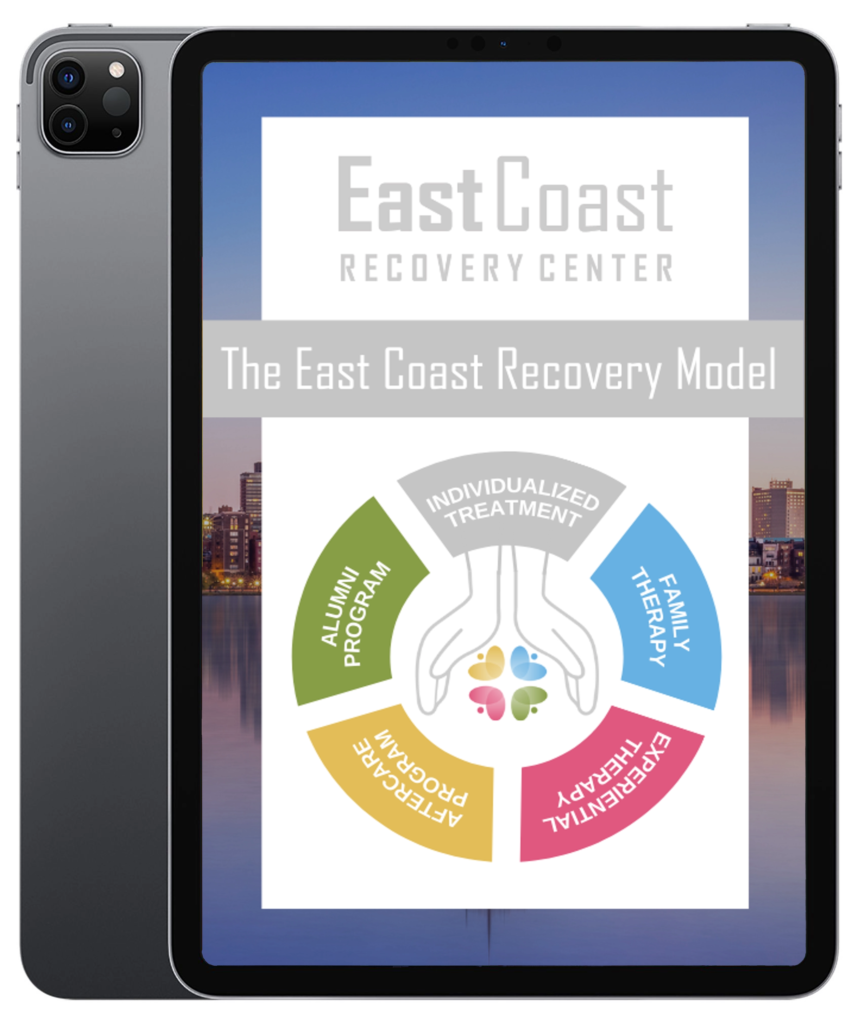
Download Our FREE East Coast Recovery Model eBook
Our inhalant addiction treatment pairs clients with individual case managers. These are team members who work on behalf of our clients from beginner to end.
When you call our center for care, we will assign a case manager to your case. That case manager is there to help you from start to finish, getting to know the severity of your disorder, whether you have other mental health conditions to treat while you are with us, and what types of therapies might be a good fit.
Each case manager works to support our clients as they move through their program. Nearing completion, that same case manager will prepare clients for what comes next with our aftercare and discharge planning. This means setting clients up for returning home, and:
As you participate in things like 12-step programs, each of our case managers can work with you to find local 12-step programs as you leave our facility, so that you can keep your support going as long as you need.
Inhalant addiction carries severe physical and neurological risks, making quick intervention essential after a setback or relapse. Outpatient treatment provides critical, flexible support for individuals across Massachusetts who have faced a setback, need more help amidst a busy schedule, or are transitioning.
If you aren’t sure which program, full or partial day, is best for you, that’s okay. When you call our emissions team, we can help you review your current mental and physical health, any history of addiction including inhalant addiction, and decide which level of care might be best at this time.
Let us help you get back on track.
Call our team today at (617) 390-8349 to get started with your inhalant addiction treatment.
Symptoms can include hostility, irritability, paranoia, confusion, difficulty concentrating, and depression. Other symptoms might extend to the behavioral changes associated with addiction, such as legal issues, poor performance in school or at work, or even financial issues.
Research indicates that children and teenagers between the ages of 12 and 17 are the most likely to use inhalants. They make up the largest percentage of inhalant users, but children as young as five might use inhalants because they are easy to find and inexpensive. Research also indicates that those who use inhalants at a young age are more likely to move on to other substances later in life.
Yes, they are. Long-term inhalant abuse can lead to physical and psychological complications. In terms of physical complications, abusing inhalants can lead to bronchitis, asthma, issues with your sinuses, tuberculosis, or STIs. Psychologically, it can cause things like depression, inhalant-induced psychotic disorder, neurocognitive disorders, anxiety, or, in the most serious of cases, inhalant and intoxication delirium.
There are many risk factors that can lead to addiction of any kind, including inhalant use disorder, such as environment, genetics, upbringing, and previous history of substance use. At our facility, we work hard to provide custom treatment that tackles a multitude of addictions, helping each client to better understand their respective causes and risk factors.