Overcoming oxycodone in MA is one of the most challenging transitions a person will experience. At East Coast Recovery Center, located just 20 minutes outside of Boston in Cohasset, Massachusetts, we know how much support is needed during this transition. We know that many clients worry about how long it will take to rewire their brain after addiction and how long treatment will last.
Oxycodone addiction rewires daily routines, impacts families, and puts strain on psychological stability. But at our treatment center, our goal is to help clients find stability, rebuild those relationships, and create healthy routines through our outpatient programs.

Oxycodone strongly alters the brain’s reward chemistry. This means that clients in need of Oxycodone rehab in Massachusetts are struggling with intense physical cravings and withdrawal symptoms that can persist for weeks.
Even those who finish an MA inpatient treatment plan will still struggle with ongoing cravings. Outpatient care at East Coast Recovery Center is designed as a long-term buffer against these challenges through a dual approach. Our full day and partial day programs incorporate medication assisted treatment and real world application.
For opioid recovery, our MAT program plays a critical role. This is a way to combine FDA-approved medications with therapy. Using MAT, the medications we provide can help to safely minimize severe physical cravings and block the euphoric effects of opioids. This makes it possible for clients to remain medically stable, an essential starting point for which to engage in ongoing psychotherapy.
Unlike residential treatment, where you are isolated from triggers, outpatient care allows you to face the actual stressors of life—such as work tension or family conflict. At East Coast Recovery we provide two levels of outpatient treatment both of which help you tackle these real world sources of stress and immediately bring those experiences back to your therapist during your next session.
All of this makes it possible to learn which healthy coping mechanisms you like most, where you can build personal resilience and better emotional regulation. When you walk away from our treatment programs, you’ll know confidently that you have the skills to tackle these sources of stress or triggers in real time.
Recovery is not a one-size-fits-all process. That is why we offer two distinct levels of outpatient rehab to ensure that each person gets the appropriate level of oversight and support.
This is our most Partial Day track. It is meant for individuals who need robust clinical support but have a stable living environment. This, for example, can work for someone who has recently completed their initial oxycodone detox and an inpatient stay elsewhere, but still want a relatively full-time level of support as they start to transition.
Our Day Treatment provides 6 clinical hours of sessions per day. This intensive schedule provides a safe, highly structured alternative to inpatient hospitalization, or a robust next level down from an inpatient program.
This is our next level of care. A flexible, step-down track explicitly structured for clients who are transitioning back into full-time employment, school, or intensive family care, our partial day is just that: a partial day. Instead of meeting for a full day of therapy and holistic sessions every day of the week, clients meet a few days per week, for just a few hours per day.
This makes it possible to continue receiving part-time support as you transition while still managing other personal or professional obligations.
Oxycodone strongly alters the brain’s reward chemistry. This means that clients in need of Oxycodone rehab in Massachusetts are struggling with intense physical cravings and withdrawal symptoms that can persist for weeks.
Even those who finish an MA inpatient treatment plan will still struggle with ongoing cravings. Outpatient care at East Coast Recovery Center is designed as a long-term buffer against these challenges through a dual approach. Our full day and partial day programs incorporate medication assisted treatment and real world application.
For opioid recovery, our MAT program plays a critical role. This is a way to combine FDA-approved medications with therapy. Using MAT, the medications we provide can help to safely minimize severe physical cravings and block the euphoric effects of opioids. This makes it possible for clients to remain medically stable, an essential starting point for which to engage in ongoing psychotherapy.
Unlike residential treatment, where you are isolated from triggers, outpatient care allows you to face the actual stressors of life—such as work tension or family conflict. At East Coast Recovery we provide two levels of outpatient treatment both of which help you tackle these real world sources of stress and immediately bring those experiences back to your therapist during your next session.
All of this makes it possible to learn which healthy coping mechanisms you like most, where you can build personal resilience and better emotional regulation. When you walk away from our treatment programs, you’ll know confidently that you have the skills to tackle these sources of stress or triggers in real time.
When you step into our facility in Cohasset, your schedule consists of a balance between evidence-based holistic care and clinical care.
In day treatment, for example, you might start your day with us using a morning grounding check-in, often utilizing Mindfulness Meditation. This helps to calm the nervous system and the physical anxiety frequently associated with early opioid recovery.
From there, clients might find a schedule of intensive group therapies like Cognitive Behavioral Therapy (CBT) and Dialectical Behavior Therapy (DBT). These sessions help to unpack the behaviors behind substance abuse. After a break, afternoon schedules involve individual therapy or specialized trauma treatment followed by a localized peer-support meeting.
In our partial day treatment, the schedule contains similar activities, but in a denser timeline. There might be focused behavioral groups or individual check-ins during a designated block of the day, after which clients are free to go.
Sustained sobriety requires more than just stopping the use of oxycodone. At East Coast Recovery, we know that it means building an active lifestyle, one that has activities, hobbies, and social events that each client finds rewarding.
To support this transition, our facility incorporates multiple wellness activities into our full and partial day programs. By participating in things like mindful meditation and family therapy, clients are put in a position to better support themselves when they leave our treatment center.
Our mindful meditation practices teach clients how to sit with physical discomfort or emotional distress, learning that these are not to be ignored or pushed away with oxycodone or other substances. Rather, that these are simply to be observed and acknowledged as one piece of a whole part.
Many of our clients participate in experiential therapy which includes hands-on art, music, and other movement exercises that help get clients through intellectual blocks. These experiential therapies can be very useful for those struggling with unprocessed trauma in addition to an oxycodone addiction, or those who need to process deeper emotions in a way that might be more comfortable than sitting in an office.
Our family therapy sessions help individuals rebuild relationships with their loved ones. During the sessions we provide education for loved ones on opioid dependency, so that everyone in the home can do their best to support a loved one in long-term recovery, being able to recognize signs of a relapse and avoid things like codependency or enabling behaviors.
Taking the first step can feel overwhelming, but our admissions process is direct, confidential, and compassionate. If you are looking for Oxycodone rehab in MA, you can contact our admissions team by calling us directly at (617) 390-8349.
When you reach out, you’ll be connected to a compassionate specialist who gives you a free consultation, making recommendations for what your next step should be, what you can expect, and how you can check your insurance benefits for coverage.
We perform a confidential over-the-phone screening to evaluate your history with oxycodone, any co-occurring mental health conditions (such as anxiety or depression), and your current physical health. Then our team works to verify your benefits, figure out what your out-of-pocket costs will be, and map out your individual care plan.
Each client is different and so are their care plans. Our plans will combine medical support, holistic practices, and behavioral therapies that are built on a case-by-case basis.
Contact our team today at (617) 390-8349 to get started with Oxycodone rehab in MA.
Costs are based on your treatment program but our facilities work hard to provide payment plans and insurance opportunities that make treatment accessible no matter your budget. When you call our team we can help verify your insurance benefits during your initial consultation or you can contact your insurance company directly.
Anyone who struggles with an opioid addiction will benefit from rehab. Oxycodone might have been prescribed for a legitimate purpose but if you have developed an addiction, our medication assisted treatment and evidence-based therapies will help you eliminate that dependency and learn fundamental skills for avoiding triggers and living a sober lifestyle.
When you reach out to our team we will start an initial assessment to help determine what length of treatment is best for you. Most people spend an average of 30 to 90 days in rehab but after that you’ll still likely participate in a variety of resources and community programs that can help you reduce your risk like our aftercare program, 12-step meetings, and sober living homes.
Our 30-day Outpatient Treatment programs are a great place to start. You may not know how long your treatment program should be until you get started but this is a good amount of time to help deal with physical withdrawal symptoms and establish strategies that help you prevent relapse.
If you so choose, you can extend your stay to a 60-day program where you’ll start to develop healthy habits to maintain sobriety while also addressing any behavioral or situational issues that might have contributed to your addiction. If you opt for a 90-day program, you’ll have the highest probability of abstinence, building the same tools as the 30 and 60 day programs but working on identifying potential triggers and overcoming them.
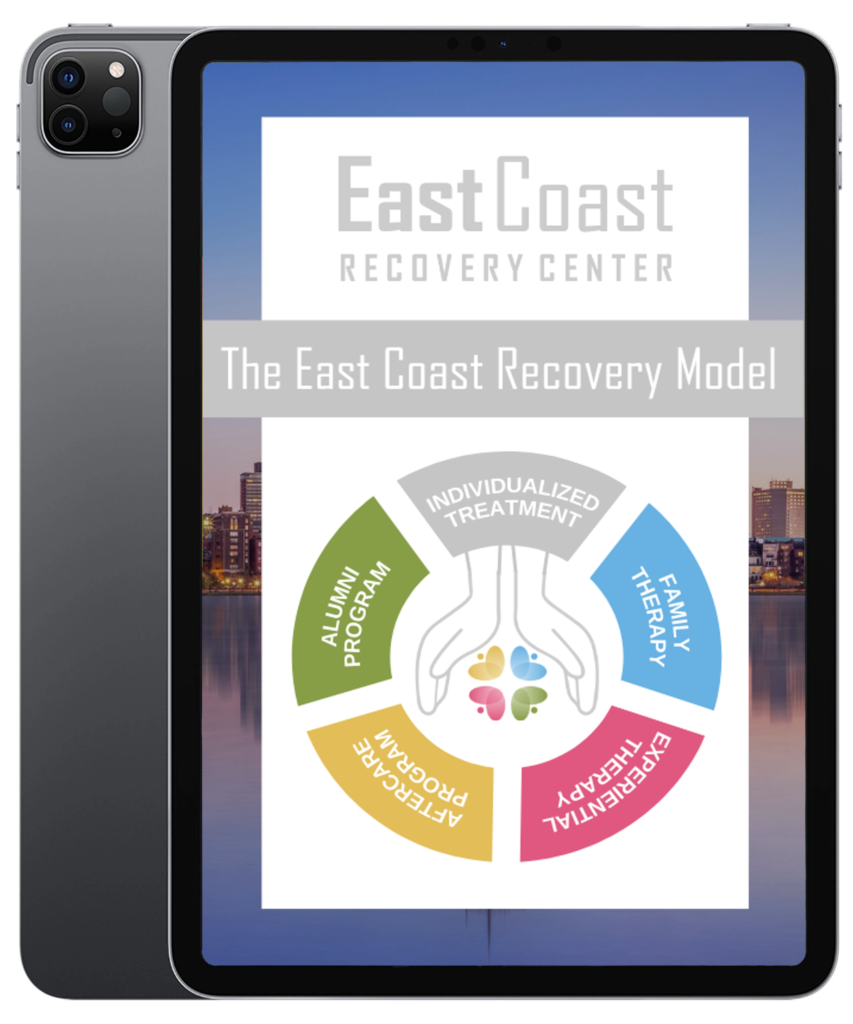
Download Our FREE East Coast Recovery Model eBook