By the time the sun crept over Cohasset’s quiet shoreline, Maya already had a journal page of reflections. She’d just finished her third week in East Coast Recovery’s Partial Hospitalization Program (PHP)—day-long therapy sessions, beach-side mindfulness, evening recovery meetings—and something felt different this time. For the first time in years, she believed the change could stick.
If you—or someone you love—are standing where Maya once did, one question dominates every other: “What is the success rate of PHP treatment?” This article unpacks the data, the definitions, and the real-world factors that turn an intensive daytime program into a launchpad for long-term recovery.
Understanding PHP in the Continuum of Care
A Partial Hospitalization Program is sometimes called “day treatment,” delivering 20+ hours of evidence-based care each week—more structure than an Intensive Outpatient Program (Partial Day Treatment Program) yet more independence than 24-hour residential rehab. ASAM classifies PHP as Level 2.5, bridging inpatient and outpatient care for people who are medically stable but still need daily clinical support.
In a Partial Hospitalization Program, clients spend four to six hours in group therapy, individual counseling, psychiatric appointments, and skills workshops, then go home (or to a sober-living residence) each evening to practice those skills in real life. This “real-world rehearsal” is a defining advantage: it lets clients face triggers with a safety net waiting the next morning.

Measuring “Success” in Addiction Treatment
Unlike a strep-throat test, recovery doesn’t yield a single positive-negative result. Researchers—and people in recovery—track success in three broad ways:
- Program completion (finishing the entire treatment episode).
- Post-treatment outcomes (abstinence, reduced use, improved mental health, better quality of life).
- Long-term recovery progress (maintaining gains over months and years).
Because addiction is a chronic, relapsing illness, even brief lapses don’t equal failure; rather, they signal that the treatment plan needs adjustment—much as an asthma flare prompts a medication tweak.
What the Numbers Say: PHP vs. Other Levels of Care
Overall Rehab Completion & Sobriety Rates
A large review by the Butler Center for Research found that 85–95 percent of people who complete a drug-rehab program remain abstinent nine months later, and about 80 percent report a higher quality of life . PHP programs fall inside that data set—meaning when clients stick with treatment through discharge, their odds of sustained sobriety are excellent.
PHP Compared with Residential Inpatient
Multiple randomized and naturalistic studies show that Partial Day modalities (Partial Day Treatment Program and PHP) can achieve outcomes comparable to residential rehab for most patients, provided medical stability and a safe evening environment. A classic PubMed review notes that clients with strong social support often fare just as well as outpatients, while those with severe psychiatric comorbidity may benefit from an initial inpatient stay. In practice, many individuals step down from detox ➔ inpatient ➔ PHP ➔ Partial Day Treatment Program, stacking the strengths of each level without losing momentum.
Treatment Duration Matters
The National Institute on Drug Abuse (NIDA) highlights a key principle: “Most addicted individuals need at least 90 days of treatment for significant improvement.”. That 90-day window can be a continuous stay—or an aggregate across levels (e.g., 4 weeks of PHP + 8 weeks of Partial Day Treatment Program). Programs that plan a full continuum, rather than a single short stint, see markedly better retention and relapse-prevention numbers.
Relapse in Perspective
Relapse rates for substance use disorders hover around 40–60 percent, roughly the same range as other chronic illnesses like hypertension or asthma. Far from failure, a slip often means the person needs renewed structure—precisely what step-down PHP services or alumni supports provide.
Five Drivers of PHP Success
1. Individualized, Evidence-Based Plans
Addiction isn’t one-size-fits-all. Programs that tailor modalities—CBT, DBT, trauma therapy, medication-assisted treatment—see stronger outcomes). East Coast Recovery’s clinical team performs a deep-dive assessment on Day 1, then revisits your plan weekly to keep therapy relevant and challenging.
2. Dual-Diagnosis Integration
Roughly 50 percent of people with substance-use disorders also live with a mental-health condition . PHPs that embed psychiatric care, not just addiction counseling, significantly cut relapse risk. East Coast Recovery offers on-site medication management and trauma-informed therapies so depression, anxiety, or PTSD don’t undercut your sobriety.
3. Supportive Environment & Therapeutic Community
Research consistently links social connection to lower relapse. PHP supplies daily peer interaction; East Coast Recovery goes further with Friday beach therapy circles, evening transportation to meetings, and cookouts—proving recovery can be both rigorous and joy-filled.
4. Adequate Length of Stay
Remember NIDA’s 90-day benchmark. East Coast Recovery’s average PHP stay is 4–8 weeks, seamlessly followed by Intensive Outpatient and alumni supports to hit or exceed that critical timeframe.
5. Robust Aftercare
Continuing care—regular therapy, support groups, alumni check-ins—correlates with markedly lower relapse rates. Aftercare Program members receive ongoing group sessions, community service outings, and a 24/7 alumni line so help is never farther than a phone call.
How East Coast Recovery Raises the Bar
- Modality-Rich Treatment: From EMDR to experiential adventure therapy, you’ll discover multiple pathways to healing, swapping approaches if one stalls.
- Licensed, Compassionate Team: Many staff are in long-term recovery themselves, blending clinical expertise with lived empathy.
- Nature-Infused Healing: Our South Shore campus includes outdoor meditation decks and that beloved beach group—because salt air can loosen stories that a fluorescent room never will.
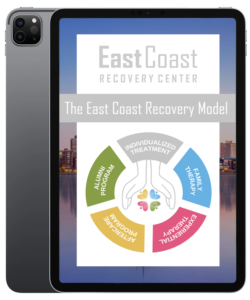
- Seamless Continuum: Admissions, PHP, Partial Day Treatment Program, outpatient, sober-living referrals, alumni—all under one roof, so momentum never breaks.
- Family Integration: Weekly family systems workshops teach loved ones how to support recovery without enabling relapse cycles.
Ready to Start Your PHP Journey?
Healing doesn’t have to mean disappearing from life for months. East Coast Recovery’s PHP lets you work intensely on recovery by day, then practice freedom safely by night. If you’re ready to trade isolation for community and fear for science-backed strategy, call our admissions team at (617) 390-8349 or visit East Coast Recovery Contact today.
Frequently Asked Questions
How is “success” actually measured in a PHP?
Clinically, programs track abstinence, reduced use, mental-health scores, employment status, and legal outcomes. But many clients define success more personally: waking up without cravings, reconnecting with family, or feeling hopeful for the first time in years.
Is PHP really as effective as going away to 30-day rehab?
For medically stable adults who have a safe place to sleep, yes—studies show equal or better long-term outcomes when PHP is matched to the client’s needs. If your home is chaotic or you need medical detox, starting inpatient makes sense; stepping down to PHP maintains gains while re-introducing real-world practice.
What’s the ideal length of a PHP stay?
Most clinicians recommend 4–8 weeks, then at least another month or two of structured outpatient care to reach NIDA’s 90-day milestone. Some clients extend PHP if they need more stabilization; others step down sooner but add extra Partial Day Treatment Program hours.
Can PHP help if I have depression or anxiety too?
Absolutely. Integrated dual-diagnosis treatment is a cornerstone of modern PHP care. East Coast Recovery’s psychiatric providers prescribe and monitor medications, while therapists use evidence-based modalities to treat both conditions in tandem—a strategy shown to reduce relapse risk.
What happens after I finish PHP?
Before discharge, you and your therapist craft an aftercare roadmap—Partial Day Treatment Program sessions, individual counseling, alumni groups, 12-step or SMART meetings, and (if needed) a sober-living arrangement. Ongoing connection is the strongest predictor of long-term recovery.