Inhalant use disorder happens when people use household or workplace items like model glue, spray paint, or lighter fluid to get high. Sometimes called huffing, bagging, or even snorting, this can have serious health effects and requires professional treatment. Thousands of products can be abused like gasoline, nail polish remover, paint thinner, and anything else that can get people high.
Inhalant use disorder stimulates and reinforces the reward system of the brain, which can lead to dependence, negative behaviors that are harmful to health and happiness, and addiction. Recent surveys have found that over 2.4 million people have abused inhalants in the last year. If you or someone in your family is among them, East Coast Recovery can provide inhalant addiction treatment.

Inhalant use disorder can cause many symptoms, including irritability, confusion, paranoia, and depression. Sometimes, people who are struggling with pre-existing mental health disorders like depression may find that substance abuse, like inhalants, can exacerbate those symptoms.
For that reason, we provide dual diagnosis treatment for people who struggle with both mental health and substance abuse disorders.
We specialize in flexible outpatient programs, including our full-day and partial-day programs. Each of these can last anywhere between 30 and 90 days, depending on your needs, and they vary in terms of how frequently they meet.
If you are participating in a dual diagnosis program or you are struggling with addiction to inhalants and other substances that might necessitate medication-assisted treatment, both of those can be designated as a day or partial-day program.
During these programs, you’ll participate in a range of different therapies and holistic modalities to help you build healthy coping skills, manage stress more effectively, and foster a healthy support network for your continuing sobriety.
At East Coast Recovery, our inhalant addiction treatment programs incorporate things like experiential therapy, family programs, group therapy, and aftercare support to ensure clients get the best possible chance at long-term recovery.
At our facility, we utilize things like cognitive behavioral therapy and dialectical behavioral therapy. These are some of the most common forms of treatment for addiction. Cognitive behavioral therapy can teach you how to deal with stressful situations and resist the urge to use inhalants by swapping negative behaviors for positive ones.
We also utilize family therapy as a way to improve communication and relationships between your family members. This can teach family members about the risks of inhalant use and help them support you in your sobriety.
Our goal is to utilize a lot of experiential activities and other forms of engagement that offer alternatives to inhalant use, building new skills, bolstering self-esteem, and offering social experience. This can include art therapy, play therapy, animal therapy, and outdoor therapy.
Finally, we aim to reduce the risk of relapse by not only teaching healthy coping skills but also building a network of sober, supportive members within your community. For this, our team helps you participate in 12-step programs and support groups, things that you can continue to utilize long after you leave our facility.
At East Coast Recovery, we are committed to helping each client live a healthy and fulfilling life after addiction. That is why it is important to get inhalant addiction treatment as soon as you can.
When you call our center for care, we will assign a case manager to your case. That case manager is there to help you from start to finish, getting to know the severity of your disorder, whether you have other mental health conditions to treat while you are with us, and what types of therapies might be a good fit.
Each case manager works to support individuals as they move through their program and prepares them for what comes next with our aftercare and discharge planning. This means setting clients up for returning home, and:
As you participate in things like 12-step programs, each of our case managers can work with you to find local 12-step programs as you leave our facility, so that you can keep your support going as long as you need.
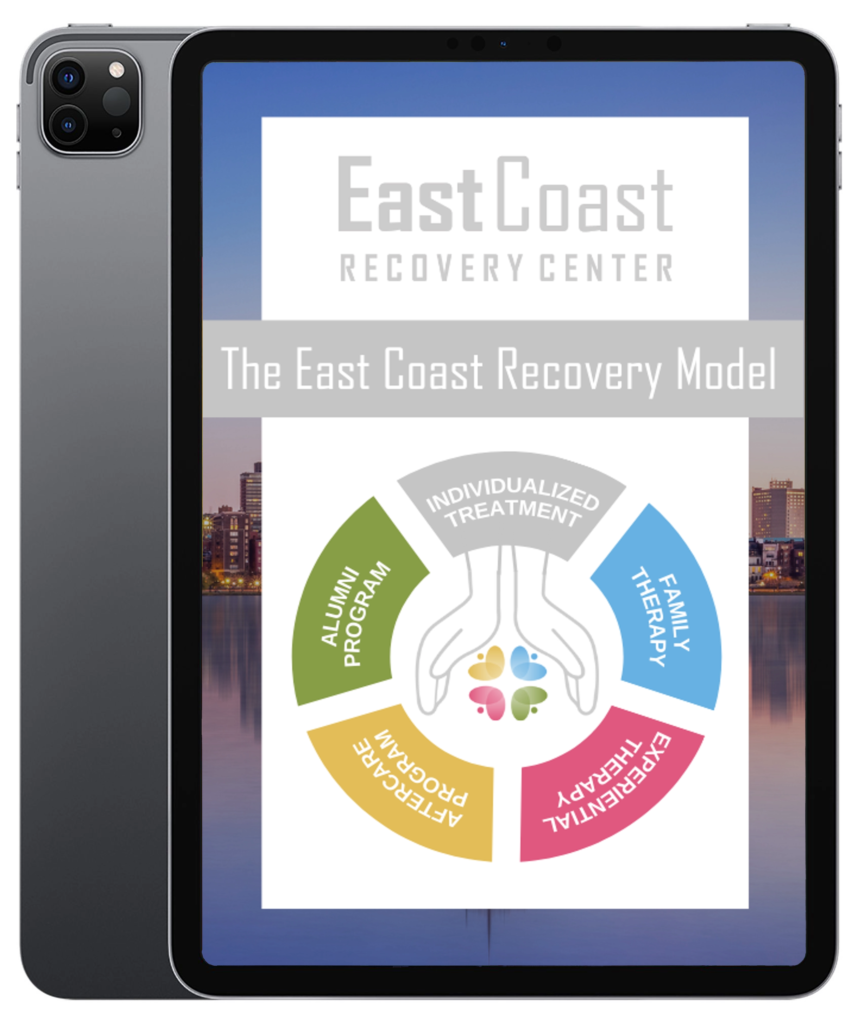
Download Our FREE East Coast Recovery Model eBook
With East Coast Recovery, we provide a variety of ways to treat inhalant abuse disorder. With things like family counseling, experiential therapy, cognitive behavioral therapy, and support groups, you can learn how to handle stress more effectively, improve your communication with family members, build skills and social experiences, and reduce your risk of relapse with a support network.
Call our team today at (617) 390-8349 to get started with your inhalant addiction treatment.
Symptoms can include hostility, irritability, paranoia, confusion, difficulty concentrating, and depression. Other symptoms might extend to the behavioral changes associated with addiction, such as legal issues, poor performance in school or at work, or even financial issues.
Research indicates that children and teenagers between the ages of 12 and 17 are the most likely to use inhalants. They make up the largest percentage of inhalant users, but children as young as five might use inhalants because they are easy to find and inexpensive. Research also indicates that those who use inhalants at a young age are more likely to move on to other substances later in life.
Yes, they are. Long-term inhalant abuse can lead to physical and psychological complications. In terms of physical complications, abusing inhalants can lead to bronchitis, asthma, issues with your sinuses, tuberculosis, or STIs. Psychologically, it can cause things like depression, inhalant-induced psychotic disorder, neurocognitive disorders, anxiety, or, in the most serious of cases, inhalant and intoxication delirium.
There are many risk factors that can lead to addiction of any kind, including inhalant use disorder, such as environment, genetics, upbringing, and previous history of substance use. At our facility, we work hard to provide custom treatment that tackles a multitude of addictions, helping each client to better understand their respective causes and risk factors.