Opiates refer to a group of natural drugs that come from the Opium poppy plant. Opiates bind to the opioid receptors in your brain, where they relieve pain and produce a sense of euphoria. It is the pain-relieving aspect behind why opiates are often prescribed for things like acute or chronic pain management.
Many people are associated with the term “opioid,” which refers to any version of a substance that binds to your opioid receptors, and this can include:
Opiates are highly effective at managing pain, such as:
These natural opiates attach themselves to the opioid receptors in the brain, located on the nerve cells. These receptors are what would normally send pain signals back and forth to the brain, but opiates block that signal and instead release dopamine. The reduced pain signals and the increased feelings of dopamine lead to reduced pain, more relaxation, and euphoria.
However, opiates are highly addictive, and their ability to not only reduce pain but also increase pleasure means that they are more likely to be misused, and that misuse leads to the need for professional opiate rehab in Massachusetts.

Many people who are struggling with underlying pain or secondary mental health conditions will start their opiate rehab Massachusetts based on what is called medication-assisted treatment.
At East Coast Recovery, our MAT can be:
This program is a comprehensive method using FDA-approved medications in conjunction with behavioral therapies. The medications are there to help with the physical and psychological aspects of addiction, primarily helping with the withdrawal symptoms. With opiate rehab, Massachusetts residents will use some of the medications to ease cravings while they continue with a day or partial day program of behavioral therapies.
MAT has been shown to be much more effective compared to medication or behavioral therapies on their own. Combined with individual, group, and 12-step programs as well as Wellness activities and family counseling, these programs provide a comprehensive option for healing.
We teach each of our clients how to understand and overcome the physical aspects of addiction, but also how to reestablish connections with friends and family, and rebuild a successful and fulfilling life. Much of this comes with the foundation of experiential therapy.
One of the many ways in which we ensure personalized day or partial day programs for our clients is through a wide range of therapeutic methods, many of which fall under the category of “ experiential therapy.”
Experiential therapy often overlaps with some forms of holistic treatment for which many studies have shown a lot of benefit.
Several studies have focused on small group art therapy as a way to manage chronic pain. Research has shown that art therapy, any basic form of art when used therapeutically, can help in many ways, like pain management, reducing anxiety, boosting mood, improving memory, and helping overcome trauma.
Art can take the form of watercolors, finger painting, papier-mache, clay modeling, and anything in between.
Clients do not need previous experience with the art medium nor any type of talent for it to be therapeutically useful. For example:
Killian is struggling with addiction to opiates. He also has chronic pain. Some days, the pain is so high that he believes opiates are the only thing that can help him.
During his day program with East Coast Therapy, he started using art therapy to become more self-aware, painting and drawing as a way to relieve some of his stress and tension.
Through this practice, Killian learned that sometimes he was making the chronic pain worse by stressing about it and holding unnecessary tension, especially in his jaw, shoulders, and arms. But when he started working with paint, he became more self-aware of where he was physically holding tension in his body.
This didn’t cure the condition that caused Killian’s chronic pain, but it helped him reduce some of the unnecessary pain that he added because of the stress, anxiety, and fear associated with the condition. It also gave him a better outlet for improving his mood and learning to cope more successfully with his chronic pain.
At East Coast Recovery, we also teach mindfulness as one of our main modalities. Mindfulness can be combined with several other highly effective therapies, like cognitive behavioral therapy or dialectical behavioral therapy.
During recovery, mindfulness helps to teach individuals to be present, to sit with their emotions, both good and bad, instead of trying to drink them away or use drugs to diminish their effect.
With Killian, mindfulness was used in addition to his art therapy and dialectical behavioral therapy. The mindfulness helped him when he was painting to be more mindful of his breathing, to focus on the movements of his paintbrush, and each inhale or exhale.
Doing so helped him notice and relieve the tension he was holding in his jaw that was causing so many headaches. It also helped him notice the tension he was holding in his shoulders, which was causing back pain.
Again, this didn’t necessarily make the cause of his chronic pain go away, but it changed how bearable it was and his perception toward it, giving him an opportunity to appreciate things other than that condition and learn to control it without opiate abuse.
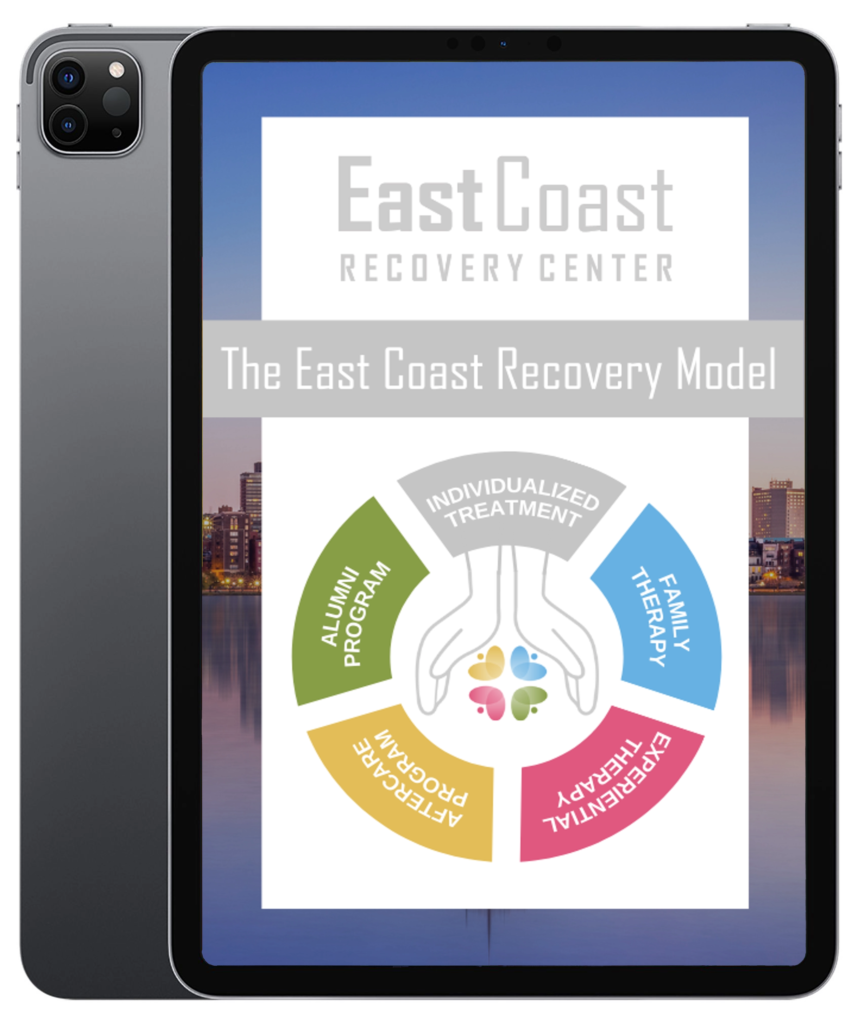
Download Our FREE East Coast Recovery Model eBook
With a wide array of flexible outpatient programs and aftercare support, including MAT and dual diagnosis, our team can provide personalized treatment for each client. With opiate addiction treatment, our goal is to help you overcome the physical and psychological components with medication-assisted treatment and, from there, to help you rebuild a successful life using the experiential therapies that work best for you. Combined with family programs, individual and group therapy, as well as 12-step programs, you can build a supportive network around you, rekindle relationships in a healthier way, and find success in your sobriety.
Call East Coast Recovery today to start opiate treatment Massachusetts residents can count on.