

At our facility, we provide several forms of treatment options to give you a personalized recovery plan. We know how important it is to combine evidence-based therapies with other holistic modalities, many of which complement one another.
People who are struggling with substance abuse and related symptoms of anxiety might benefit from participating in acceptance and commitment therapy. This type of treatment helps to accept difficult or distressing emotions instead of allowing them to hijack emotional responses.
A holistic treatment option often combined with acceptance and commitment therapy for anxiety is art therapy. Art therapy can provide a resource to which you can turn long after you leave our facility. You don’t need any type of skill set or previous experience in order to benefit from art therapy.
This can take forms like:
Many adult coloring books are designed today specifically for anxiety, with repeating patterns that allow you to control something in the present moment when it feels like everything else is outside of your control.
We know how common it is to struggle with feelings of isolation, loneliness, and depression, especially when you are in recovery. Whether or not you have a depressive disorder, learning to manage symptoms of depression can help you maintain your sobriety long-term.
One of the best therapies for managing depression is cognitive behavioral therapy. Cognitive behavioral therapy is a way for you to catch automatic negative thoughts, things that you might not realize are having a detrimental impact on how you feel and how you behave.
For example, you might automatically assume that if someone wants to talk to you, it’s because you did something wrong, so you practice avoidance techniques to avoid talking to friends, family members, or even coworkers. This might lead to self-sabotaging behavior like not showing up for work, all because your boss texted you and said they wanted to chat.
With your cognitive behavioral therapy sessions, you might work with a therapist to identify where your automatic negative thoughts lead to harmful emotions or behaviors, and from there, how you can change them.
A complementary holistic option that many clients use to deal with depression is yoga. Several studies have confirmed that yoga can help manage symptoms of depression. It has even been used as a treatment option for major depressive disorder.
Yoga has a neurobiological impact. It helps you stay focused on the present when depression might encourage you to focus on the past and ruminate about mistakes, challenges, or traumas. More importantly, yoga can help you learn to sit with temporary discomfort, discomfort that might come from feelings of isolation or loneliness.
Yoga is also something that you can continue to pursue long after you leave our treatment center, available in all levels of difficulty and a range of styles throughout the area, like the MetroWest Yoga Studio.
If participating in a class in person is not yet something with which you’re comfortable, there are plenty of online resources for free and membership-based yoga programs as well.
It can be very challenging to make sure that you have the coping skills you need to avoid a relapse. Our team will work with you to regularly navigate risky situations and focus on things like solutions to your problems instead of just the problems.
However, we also incorporate meditation and breath work as a holistic avenue to help clients avoid a relapse. While your solution-focused therapy or relapse skills program might give you the tools you need to identify personal triggers, meditation and breath work can help you in the moment when you are triggered.
The right type of meditation can help you avoid giving in to the impulse you might feel when triggered, returning your mind to something within your control, your breathing. This can help you stay focused on the present and sit with your emotions instead of trying to hide from them or make them disappear.

If you are looking for help, we are here. At East Coast Recovery, we provide comprehensive intake assessments so that each of our clients can have a personalized care program. Your treatment program can include an array of evidence-based therapies and holistic modalities like breath work, yoga, mindfulness, meditation, acceptance and commitment therapy, dialectical behavioral therapy, and cognitive behavioral therapy.
Take the next step. Call our admission team today at (617) 390-8349 to start MetroWest Rehab.
Many insurance providers will cover the cost of outpatient programs, but the length and extent of that coverage is based on your insurance plan. Call our team to go over your benefits and see how they apply to the cost of care.
Each client is different, so the duration of your program will vary based on your needs. In general, we recommend programs like our partial day program anywhere between 30 days and 90 days, but this can change as you move through the program.
When you get ready to start your program, you won’t have to make as many preparations as you would for an inpatient program. Our team will reach out to you and let you know when you should arrive and what you can expect when you get here. Beyond that, you may need to set up alternatives for work or home responsibilities, like babysitters or time off.
With an outpatient program, there’s not nearly as much that you need to plan for, nor do you need to bring things like suitcases because you don’t live at the facility. You get to live at home and come to your appointments during the week.
For most people, the hardest part of treatment is choosing to reach out for help. After that, everything else becomes much easier, especially when you lean on our support team.
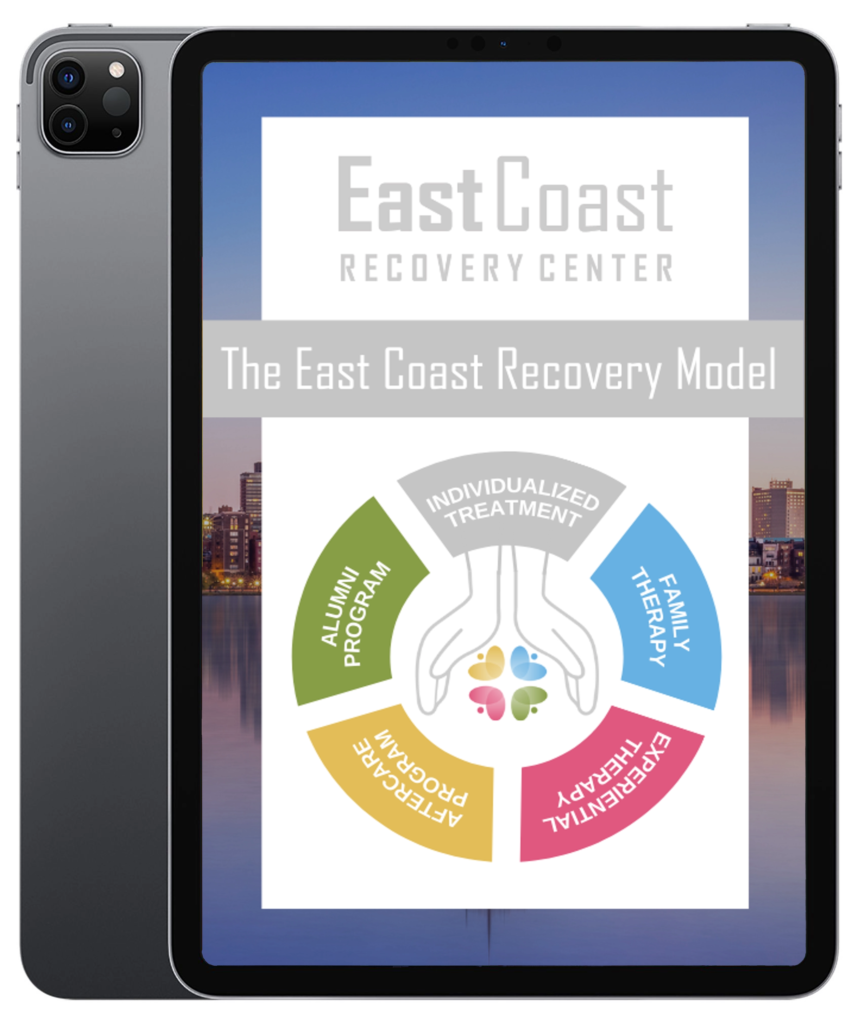
Download Our FREE East Coast Recovery Model eBook
FREE Insurance Verification









Helping Those Struggling With Addiction Achieve SUCCESS