

Coming from New Bedford, MA and getting to East Coast Recovery Center at 215 Chief Justice Cushing Hwy, Cohasset, MA 02025 is best done via car, but there are commuter rail options too.
The recommended route takes about one hour. Clients can take MA-140 North out of New Bedford, take exit 12 to merge onto MA-24 North toward Boston, then take exit 19A to merge onto I-495 South. From there, clients can merge onto US-44 East toward Plymouth, then onto Route 3 North toward Boston and finally, take Exit 35 for MA-228 toward Hingham/Cohasset.
Alternatively, clients can avoid the traffic there by taking MA-140 North to MA-24 North and continuing all the way north to merge onto I-95 South / I-93 North at the Blue Hills Flyover. Then split onto Route 3 South toward Cape Cod and take Exit 35 for MA-228 North, and follow it straight to Route 3A in Cohasset.
Commuter rail options offer an alternative, with the outbound South Coast Rail commuter train line at the downtown New Bedford MBTA Station. Clients can ride this inbound to Boston South Station. At South Station, clients can transfer to the Greenbush Line commuter rail train heading outbound toward Cohasset and get off at the Cohasset MBTA Station. Our recovery center is located just a 5-minute rideshare or local transit trip north of the station.
Finally, there are intercity bus options. Clients can board a regional DATTCO or Peter Pan express bus at the New Bedford Main Terminal bound for Boston then ride the bus directly to the South Station Bus Terminal in Boston. From there, clients can walk into the main train terminal at South Station and catch the Greenbush Line commuter rail directly down to the Cohasset Station.
Though travel time can seem a bit complicated whether you are driving or using regional transportation, many clients find that coming to our Cohasset facility is well worth their time because they can participate in multiple levels of outpatient care, focus entirely on their healing, and step away from local environments full of potential triggers.
As an outpatient facility, we specialize in more than one level of care making it possible for clients to step down as they make gains in their recovery and reach new goals. For example, our highest level of care is a full day program, one that is akin to a partial day program and provides comprehensive support for people who are struggling with severe cravings or have transitioned from an inpatient facility.
As clients start to manage symptoms more effectively and begin their focus on long-term relapse prevention and healthy coping skills, they can step down to our partial day program known as our Partial Day program. This level of care like our other levels allows clients to reside at home or in a sober living facility and come to our clinic for treatment.
As clients build their independence, they can receive ongoing support with our aftercare programs too.
Traveling for treatment, despite the inconvenience, allows our clients to break the cycle of local triggers. When clients remove themselves from the familiar environments, people, and routines that encourage addiction or relapse, they are able to put a physical and emotional barrier between themselves and their recovery. This can make it possible for clients to receive the care they need most without risk of judgment or without risk of leaving a program before its completion.
Many studies have found that stepping away from local environments and stepping into one more serene and peaceful environment can also increase recovery which is why our coastal location is often preferred. Clients not only step away from personal triggers but step toward a more serene setting that helps them build coping mechanisms and self-reflection, increasing engagement in every step of the program.

When clients travel from New Bedford, they get access to different levels of care, including MAT, dual diagnosis programs, and aftercare.
Our medication-Assisted Treatment (MAT) combines FDA-approved medications with therapy, particularly for addiction to alcohol or opioids. This early intervention stage helps clients manage the physical hurdles of early sobriety.
Clients struggling with intense cravings or severe withdrawal symptoms can benefit the most from our MAT as a way to establish a safe, medically monitored foundation for recovery. With this level of care, our team helps clients stabilize their brain chemistry and block the euphoric effects of substances. In tandem with FDA approved medications and therapy, this level of care helps significantly reduce the risk of relapse. It also allows our clients to more completely shift their focus toward the psychological healing process instead of cravings.
The next level of care is our Day Treatment Program which is an immersive, highly structured environment providing six hours of clinical care per day, five days a week. This is akin to a Partial Hospitalization Program (PHP), perfect for New Bedford residents who want increased accountability and professional support without having to live at their treatment center.
This is best for those who have finished detox or a residential program, or those who need dual diagnosis support for co-occurring mental health and addiction needs.
Stepping down, clients from New Bedford can participate in our Partial Day Program which services as a flexible, moderate-intensity track designed to bridge the gap between intensive treatment and independent living.
With this, clients meet for fewer hours across three to four days a week, but still enjoy access to ongoing individual and group therapy. This is akin to an Intensive Outpatient Program (Partial Day Treatment Program) and best for clients who are medically stable and have already built a baseline of coping skills.
Many clients choose this when they are looking to transition back into society, as our flexible schedules enable clients to continue with work, school, or personal obligations and still come to our center on a part time basis.
Finally, we know that recovery doesn’t stop after you leave our center. Clients who have completed outpatient levels of care often still require support groups and aftercare.
That is why our team offers comprehensive Aftercare Planning to ensure each client has the ongoing accountability and community support needed to protect their long-term sobriety. With this, we make it possible to connect with things like NA, AA, or SMART Recovery programs in New Bedford, to engage in community events, and to transition back into everyday life successfully despite any unforeseen stressors and triggers that are difficult to navigate alone.
By connecting individuals with alumni networks, sober housing resources, outpatient therapists, and local support groups, our aftercare coordinators ensure no one walks the path of recovery feeling alone.
Let our team help you find the right level of care today.
https://www.tandfonline.com/doi/abs/10.1300/J069v25n04_03
https://www.tandfonline.com/doi/abs/10.3109/00952998109009557
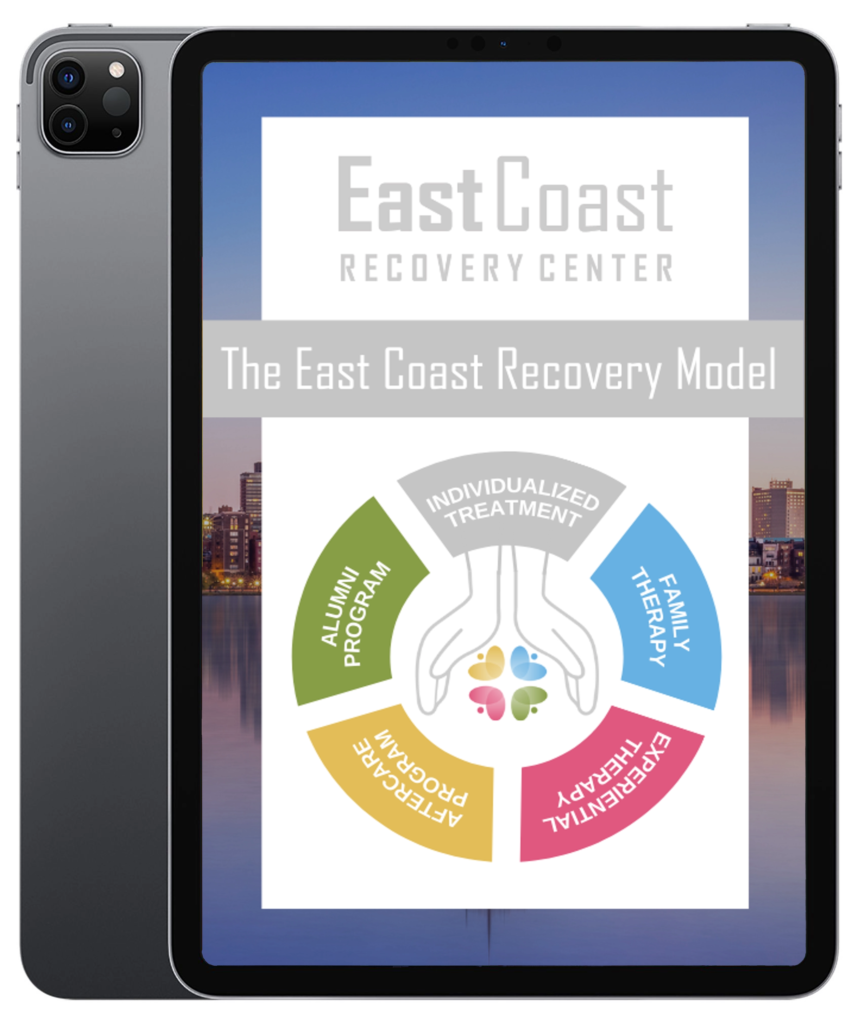
Download Our FREE East Coast Recovery Model eBook
FREE Insurance Verification










Helping Those Struggling With Addiction Achieve SUCCESS