Muscle relaxers are prescribed for many purposes, usually after things like car accidents or surgery, during the healing process. However, like many drugs, there are muscle relaxers that bring with them the risk of addiction and some that don’t. When clients are prescribed muscle relaxers, they might not be aware of the addiction risk and this can lead to problems with dependence or physical addiction.
Can You Get Addicted to Muscle Relaxers?
Yes, you absolutely can but the risk varies based on the type of muscle relaxer one is prescribed. In some cases individuals develop a physical addiction where the body is accustomed to the muscle relaxers but in other cases the addiction becomes a substance use disorder, characterized by a psychological and behavioral inability to stop using muscle relaxers.
Getting Care for Addiction with East Coast Recovery
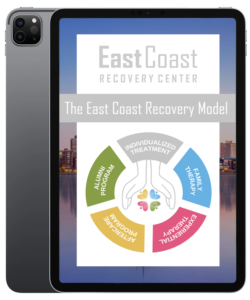
At East Coast Recovery we start with an intake and from there, provide multiple levels of care including Day Treatment programs, Partial Day programs, and traditional outpatient programs. Each level is designed to work in a step down approach, helping individuals with addiction to muscle relaxers or co-occurring conditions like addiction and chronic pain.
As individuals complete higher levels of care they can step down to the next level, still receiving the support they need through things like group therapy, support groups, and a sense of community, while building coping skills and independence back into their daily routines.
What to Expect for Muscle Relaxer Addiction Treatment
When clients reach out to our team, we go over some initial questions to determine whether our outpatient programs might be a good fit. For example, someone struggling with chronic pain might have developed a secondary addiction and as such need dual diagnosis treatment.
Another client who was prescribed muscle relaxers and opioids might be struggling with an opioid Addiction in which case medication assisted treatment may be a necessary part to the initial detox.
Whatever your circumstances our team is here to help you find the right fit, creating a place where you can focus on your recovery with different modalities and various treatment programs. We aim to combine evidence-based traditional talk therapies with holistic therapies while providing an inviting space for treatment. To reach that goal we offer Fridays group talking sessions on the beach, nearby the facility, as well as cookouts, outdoor spaces for socialization, local community events, and evening transportation to take clients to meetings.
Contact our team today at (617) 390-8349 to learn more about addiction recovery.
FAQ
Can You Get Addicted to Muscle Relaxers?
Yes, certain muscle relaxers can result in addiction but the risk of addiction varies based on the specific type of medication. Muscle relaxers don’t belong to the opioid class but many muscle relaxers will produce euphoric effects and sedative effects that can lead to misuse, physiological dependence, and a chemical addiction.
Which Muscle Relaxers Have the Highest Risk of Addiction?
Carisoprodol (Soma) has the highest risk of addiction and misuse. When this drug is broken down in the liver it converts into an anti-anxiety sedative which acts similarly to barbiturates and this leads to a high risk of abuse. It is also why this particular muscle relaxer is classified as a schedule IV controlled substance.
Are There Non-Addictive Muscle Relaxers?
There are muscle relaxers like zanaflex, baclofen, and Flexeril which have a much lower potential for addiction and are not scheduled controlled substances, however they still bring with them a small risk of physical dependence particularly if they are abused for recreational purposes or used over a long length of time.
What is the Difference Between Physical Dependence and Addiction?
A physical dependence is what happens when you take things like muscle relaxers and your body becomes accustomed to those muscle relaxers. As a result, your body is physiologically adapted to the presence of that drug and if that drug is suddenly absent, it causes physical withdrawal symptoms. By comparison, addiction or substance use disorder is categorized as a psychological and behavioral condition where an individual cannot stop the use of a medication like muscle relaxers despite experiencing negative consequences from it and wanting to stop.
What Are the Symptoms of Muscle Relaxer Withdrawal?
If an individual takes muscle relaxers for a long length of time and then abruptly stops, they will likely experience acute withdrawal symptoms. These withdrawal symptoms can include things like rapid heart rate, hallucinations, insomnia, tremors, anxiety, and rebound muscle spasms. With medications like Soma or baclofen, the withdrawal symptoms can trigger life-threatening seizures.
Can You Overdose on Muscle Relaxers?
Yes, some muscle relaxers can be life threatening especially if you take too much. Because muscle relaxers work as a central nervous system depressant, taking too much or overdosing can cause extreme confusion, drowsiness, low blood pressure, slowed breathing, or cardiac arrest.
Why is Mixing Muscle Relaxers with Other Substances So Dangerous?
Muscle relaxers are central nervous system depressants which means they slow down the functions of your central nervous system, things like breathing and blood pressure. If you combine muscle relaxers with other substances it can lead to very dangerous side effects especially if you combine them with anything that has a sedative effect such as benzodiazepines, alcohol, or opioids. This can increase the risk of dangerously depressing your central nervous system and leading to respiratory failure and death.
What Are the Common Signs of a Muscle Relaxer Addiction?
If you are worried about an addiction to muscle relaxers and yourself or someone else, it’s important to reach out for professional help but understanding those signs that regular use may have crossed into addiction are equally important. Some of the most common signs that an individual might have developed an addiction to muscle relaxers include taking higher doses than prescribed, doctor shopping where an individual goes to different doctors in order to get multiple prescriptions at the same time, taking muscle relaxers for the euphoric side effects or sedation, and having an inability to cut down on muscle relaxers despite wanting to.
How Do I Safely Stop Using a Muscle Relaxer?
If you have been provided with a prescription muscle relaxer, your doctor will likely use a gradual taper schedule to help you slowly decrease the amount of muscle relaxers you were taking over the span of several days or weeks while monitoring you for any physical symptoms. This ensures that your central nervous system is able to adapt to the change in medication present. After that, you can work with our team to participate in non addictive medical alternatives and safe strategies for lifestyle changes.
Sources