 Written by
An intervention is a planned, caring conversation in which family and friends ask someone struggling with drugs or alcohol to accept help. Done well, it’s not an ambush. It’s a clear, loving message backed by a real plan for treatment. This guide walks Massachusetts families through how to stage an intervention step by step, what to say, what to avoid, and what to do if your loved one says no. If you’d like guidance before you start, our family therapy team in Cohasset can help you prepare.
What Is an Intervention?
An intervention brings together the people who matter most to someone with a substance use problem. Each person shares how the addiction has affected them, and the group asks the person to start a specific treatment program, ideally that same day.
There are a few common approaches:
- Johnson-style (confrontational) intervention: the “surprise” format seen on TV, where the group meets the person without warning and presents consequences.
- Invitational intervention: the person is told about the meeting in advance and invited to take part, which feels less like an ambush.
- CRAFT (Community Reinforcement and Family Training): family members learn communication and boundary skills over several weeks to encourage their loved one toward treatment.
Research favors the gentler approaches. In a well-known clinical trial, families trained in CRAFT got their loved one into treatment about 64% of the time, compared with about 30% for Johnson-style interventions and 13% for Al-Anon alone. Whatever format you choose, a calm, non-shaming tone matters more than drama.
Worried about substance use? Help is close by.
East Coast Recovery Center in Cohasset, MA offers outpatient addiction treatment while you live at home. We accept MassHealth and most major insurance.
How to Stage an Intervention in 7 Steps
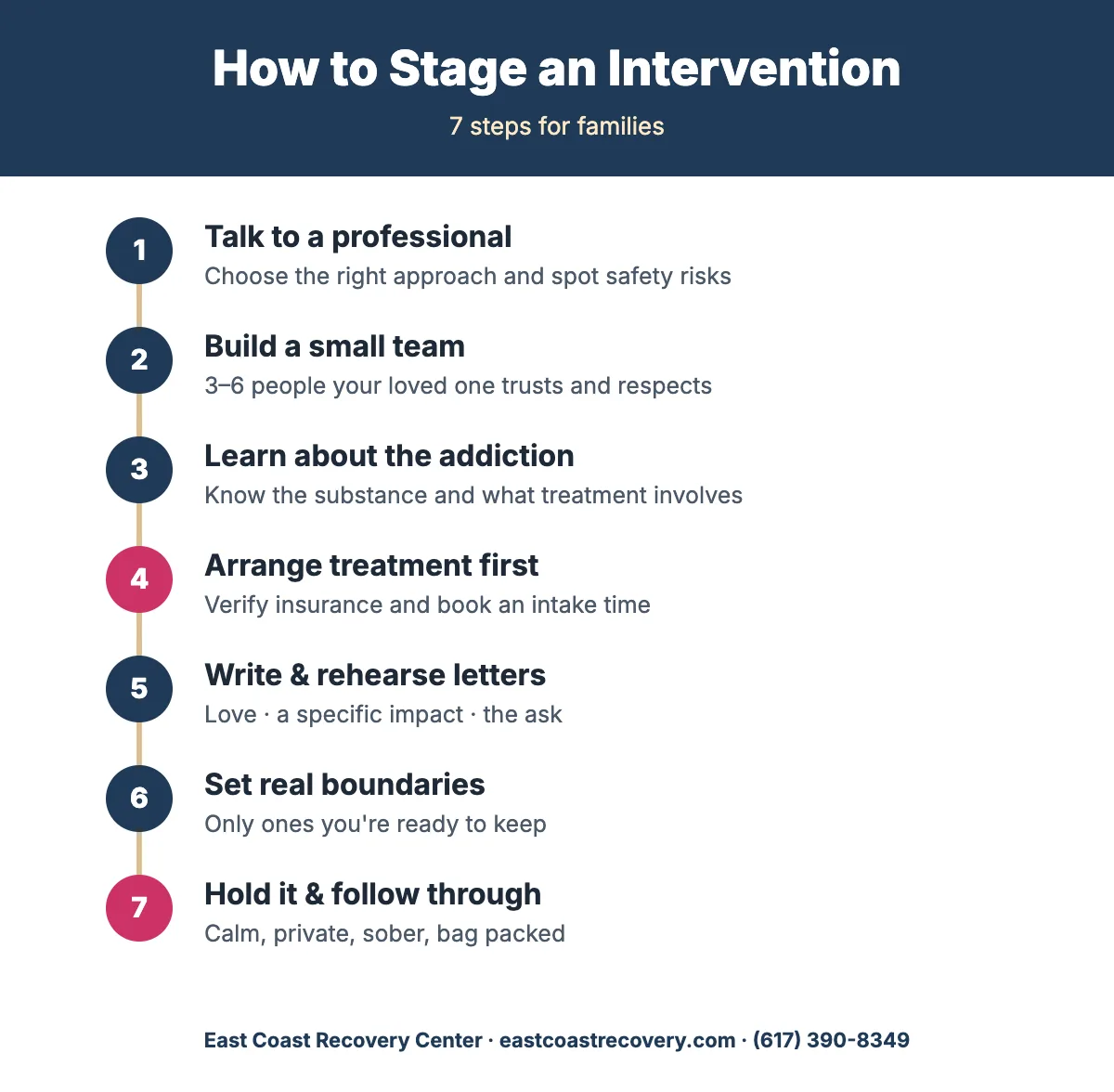
1. Talk to a professional first
An addiction counselor, interventionist, or treatment center can help you choose the right approach and spot risks. Professional help is especially important if your loved one has a history of violence, suicidal thoughts, serious mental illness, or uses several substances.
2. Build a small, trusted team
Choose 3 to 6 people your loved one respects and loves, such as a spouse, parent, sibling, close friend, or mentor. Leave out anyone who is likely to lose their temper, who is actively using, or who your loved one has a hard time with.
3. Learn about the addiction
Understand the substance, how dependence works, and what treatment looks like. This helps the team stay calm and answer questions like “What would rehab even involve?” Our guide on codependency in addiction is a good place to start.
4. Arrange treatment before the conversation
This is the step families most often skip, and it’s the most important. Verify insurance, confirm an intake time, and know how your loved one would get there. If they say yes, they should be able to start right away, before the moment passes. You can verify insurance with East Coast Recovery ahead of time, confidentially.
5. Write and rehearse what you’ll say
Each person writes a short letter (1 to 2 minutes when read aloud) with three parts:
- Love: “You’re my brother and I love you.”
- Specific impact: “When you didn’t show up to Emma’s birthday, she cried for an hour.”
- The ask: “I’m asking you to accept help today.”
Rehearse together. Decide the speaking order and who will lead.
6. Decide on boundaries, and mean them
If your loved one refuses help, what will change? Examples: no longer paying their phone bill, not letting them stay over when they’ve been using, or not covering for them at work. Only state a boundary you’re prepared to keep. Boundaries are about protecting yourself, not punishing them.
7. Hold the intervention and follow through
Choose a private, neutral place and a time when your loved one is most likely to be sober, often in the morning. Keep it calm, read your letters, make the ask, and have a bag packed if they agree. If they say no, stay kind and stick to your boundaries.
What to Say (and What Not to Say)
Helpful phrases
- “I’m here because I love you and I’m worried.”
- “I’ve noticed…” (followed by a specific event, not a label)
- “We’ve found a program that can see you today.”
- “Whatever you decide, I’m not going anywhere.”
Things to avoid
- Labels like “addict,” “drunk,” or “junkie”
- Bringing up every past mistake
- Yelling, threats you won’t keep, or ganging up
- Holding the intervention when they’re high or intoxicated
For more wording ideas, read what to say to an addict you love.
What If They Say No?
A “no” today isn’t the end. Many people who refuse at first agree to treatment days or weeks later, especially when their family holds steady boundaries and keeps the offer open. Keep taking care of yourself through Al-Anon, Nar-Anon, or Learn to Cope, a Massachusetts-based support network for families.
If your loved one’s substance use puts their life in danger, Massachusetts families have another option: a Section 35 petition, which lets a court order involuntary treatment. It’s a serious step, so speak with a professional first.
Safety first: if anyone is in immediate danger, or your loved one talks about suicide, call 911 or call or text 988.
Outpatient Treatment After an Intervention
Many people agree to treatment more readily when they learn they won’t have to leave their job or family for weeks. East Coast Recovery Center in Cohasset, MA, offers outpatient addiction treatment for drug and alcohol use disorders, with individual and group therapy, treatment for co-occurring mental health conditions, and family therapy to help your whole household heal. Read how to support someone in rehab for what comes next.
Planning an intervention? Call us at (617) 390-8349. We can help you check insurance and line up an intake time before you talk to your loved one.
Frequently Asked Questions
Do interventions actually work?
They can, especially when they’re calm, well planned, and backed by a treatment plan that can start right away. Research suggests family-training approaches like CRAFT get loved ones into treatment more often than surprise confrontations.
Should the intervention be a surprise?
Not necessarily. Invitational and CRAFT-based approaches don’t rely on surprise, and many families find they lead to less defensiveness. A professional can help you decide what fits your situation.
How much does a professional interventionist cost?
Fees vary widely, from a few hundred dollars for a consultation to several thousand for a full intervention, and are usually not covered by insurance. Before hiring anyone, it’s worth calling a treatment center; talking through your options is free.
Can you force someone into rehab in Massachusetts?
Adults generally have to agree to treatment. The exception is Section 35, a Massachusetts law that allows a family member, spouse, doctor, or police officer to petition a court for involuntary substance use treatment when someone is at serious risk of harm.
If you or someone you know is in crisis, call or text 988, or call 911 in an emergency. In Massachusetts, the Substance Use Helpline is available at 800-327-5050.