

Many of our clients are happy to travel to our location because of the community-focused approach we take, which helps manage the recovery timeline. The East Coast Recovery Center in Cohasset uses many modalities because every client has different needs and goals. We blend evidence-based therapies, such as DBT, CBT, and EMDR, with experiential treatments, such as yoga and art therapy. With group therapy sessions on Friday nights at the beach, cookouts, and other community activities, our coastal location provides Norfolk County residents with a necessary yet accessible therapeutic retreat. Just a short drive away, our outpatient programs also boost privacy and create a physical buffer from local stressors, both of which help clients sustain their long-term recovery.
Getting to East Coast Recovery Center from Norfolk County is very convenient. With a coastal location, clients can drive here or use the MBTA Greenbush line. Whether you live inland near Dedham or closer to the shore in Quincy, the drive typically takes between 25 and 45 minutes.
The most direct route from central Norfolk County involves using I-93 or MA-3. Clients can take MA-3 S toward Cape Cod and exit onto MA-228N.
If you prefer not to drive, the MBTA Greenbush Line is your best option for reaching our outpatient center. This line can be reached from several places throughout Norfolk County, including Quincy Center, Weymouth Landing/East Braintree, or West Hingham. From there, the Cohasset Station is only 1.5 miles north of us. Buses are an option too, with the MBTA Route 220 running from Quincy Center through Hingham, though getting to our center requires a short rideshare or walk from the bus stop.
If you cannot make it to your appointments, we provide professional pick-up services to ensure you arrive safely for the intake assessment and for subsequent sessions.
At East Coast Recovery, we aim to meet clients where they are, including by offering a wide range of therapeutic modalities to best fit individual goals and preferences. We incorporate several experiential therapies, things that are hands-on and designed to help clients process their emotions in non-traditional settings.
Our aim is to incorporate traditional talk therapies, such as cognitive-behavioral therapy and dialectical behavior therapy, alongside experiential modalities, including yoga, guided meditation, art therapy, and adventure therapy.

Another thing that sets us apart in terms of drug rehab Norfolk residents choose is the dual diagnosis approach we provide for those who have experienced co-occurring disorders or underlying trauma.
Through the combination of therapies that set us apart, including real-time activities that enable clients to develop healthy coping skills they can apply immediately, trauma-informed care, and multiple levels of outpatient programs, we make it possible for clients to get the help they need. This includes transitioning through a full-day or partial-day program, utilizing sober housing where necessary, and participating in evidence-based therapies to help support long-term sobriety.
Norfolk residents who have experienced a setback like a relapse or who have left a 30-day inpatient program can turn to East Coast Recovery for a form of continued support that is more robust than a traditional outpatient program.
When clients participate in a residential inpatient program, they typically get help in 30-day increments, after which they get released back to their regular routine.
These first few months transitioning back to real life are often too abrupt for many people. At East Coast Recovery, we try to bridge this gap through the full-day and partial-day programs we offer.
We know that each client is different, whether they are getting help for the first time, after a relapse, or after finishing a residential program. To that end, we aim to make our treatment center and the community it supports feel like home, reinforcing positive coping mechanisms and social support.
In addition to considering our treatment center for its unique modalities or dual diagnosis programs, many Norfolk County residents turn to us in times of need, particularly in times of relapse.
It is not uncommon for people in recovery to struggle with a relapse, and in many cases, that relapse is caused by a co-occurring mental health disorder or trauma that was never fully addressed. That is why at East Coast Recovery, we specialize in dual diagnosis treatment to handle psychological triggers and addiction at the same time, while also offering an internal family systems approach to trauma-informed care.
https://www.immi.se/index.php/intercultural/upcoming/view/Razalietal2023-3
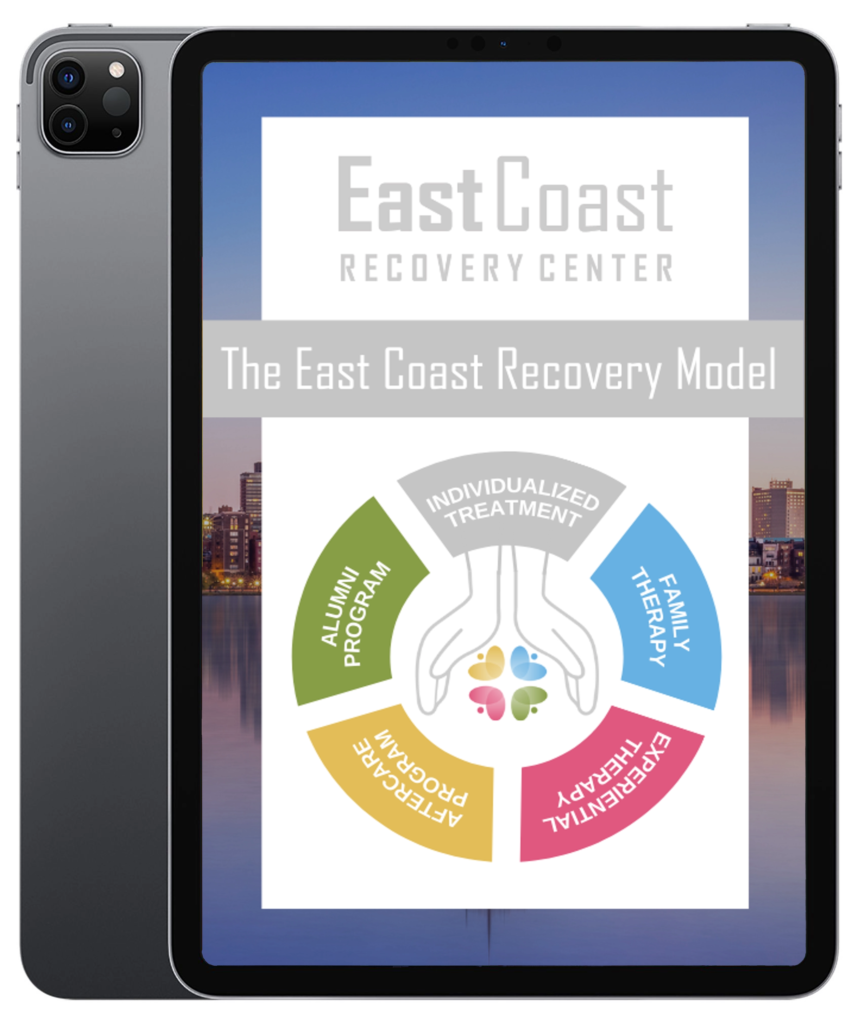
Download Our FREE East Coast Recovery Model eBook
FREE Insurance Verification









Helping Those Struggling With Addiction Achieve SUCCESS